Tangible Interfaces Lab
The Tangible Interfaces Lab at Pratt Institute, created by Steve Turbek, explores interaction design beyond the touchscreen. We design for touch, hearing, and the many other senses that people possess.
“Software is eating the world” claimed Marc Andreessen in 2011. Many consumer products, from cameras to “walkmen” to car dashboards are now simply apps on featureless glass screens. This leads to bland product design and customer dissatisfaction. In car design, touch screens have become a safety concern. “Touch Screen controls take four times longer to perform simple tasks”
Tangible Interfaces are an opportunity for designers. When “everything is an app and all apps look the same” physical interaction is an opportunity for industrial designers to create innovative new products.
Microbit Demos
The BBC Microbit is a great device to get started exploring hardware interaction. These sample code and diagrams demonstrate working with sensors, actuators, and gizmos.
Design Challenges
These design challenges explore Tangible Interface design for the class or on your own. There is no single answer. Your solutions will be based on the context and user you choose to design for.
References
Books, articles, and online resources on tangible interaction design, physical computing, and related fields.
Tangible Interfaces Lab at Pratt Institute
Tangible Interfaces Lab explores the power of interactive physical design in a world of apps on featureless touchscreens. Students will research, design, and build an interactive product that works—previous projects have included custom game controllers, portable music players, smart beekeeping hives, and electronic personal safety devices. The course emphasizes hands-on prototyping to create functional “works like” prototypes alongside refined “looks like” models. No previous experience with electronics or programming is required. Students develop skills in user research, sensory design, programming, electronics, and rapid prototyping while examining how tangible interfaces enhance safety, accessibility, and emotional connection. Students will create professional portfolio work demonstrating their ability to design interactive experiences that exist beyond the screen.
The studio focuses on designing for tactile and sensory experiences to build interactive user experiences embodied in physical products. The studio is built around iterative prototyping with extensive use of electronic components, 3D modeling/printing. No previous experience of UX or electronics is expected.
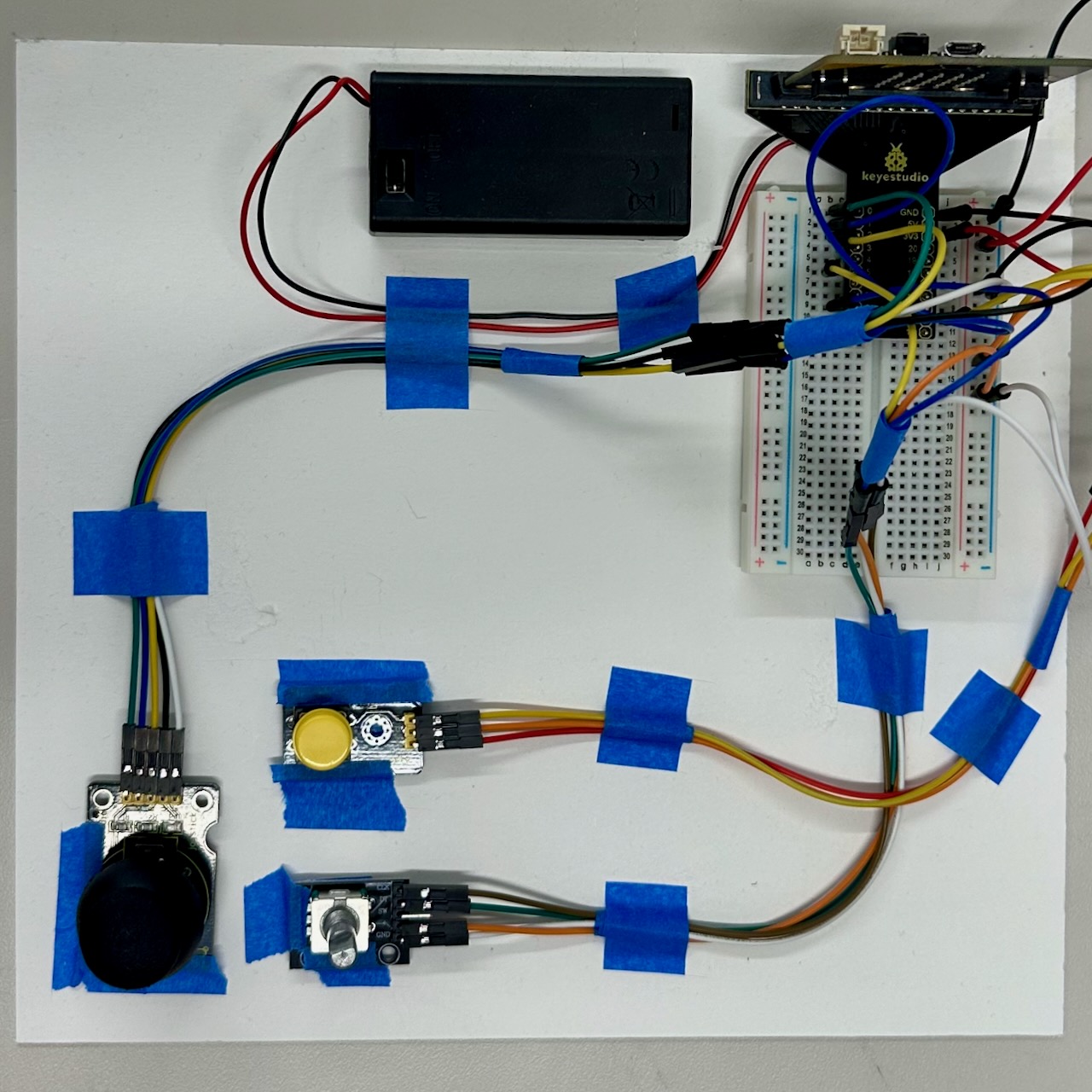
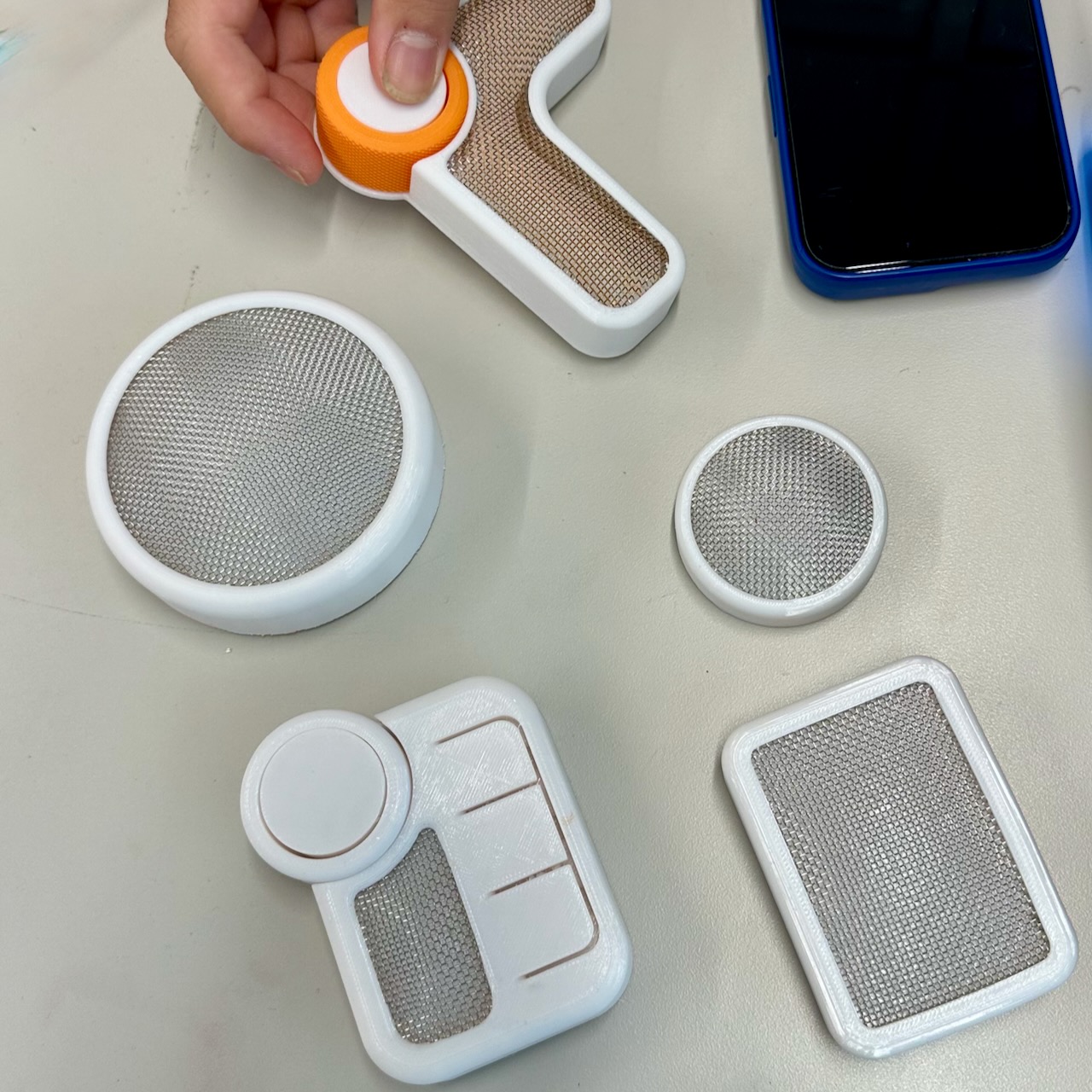
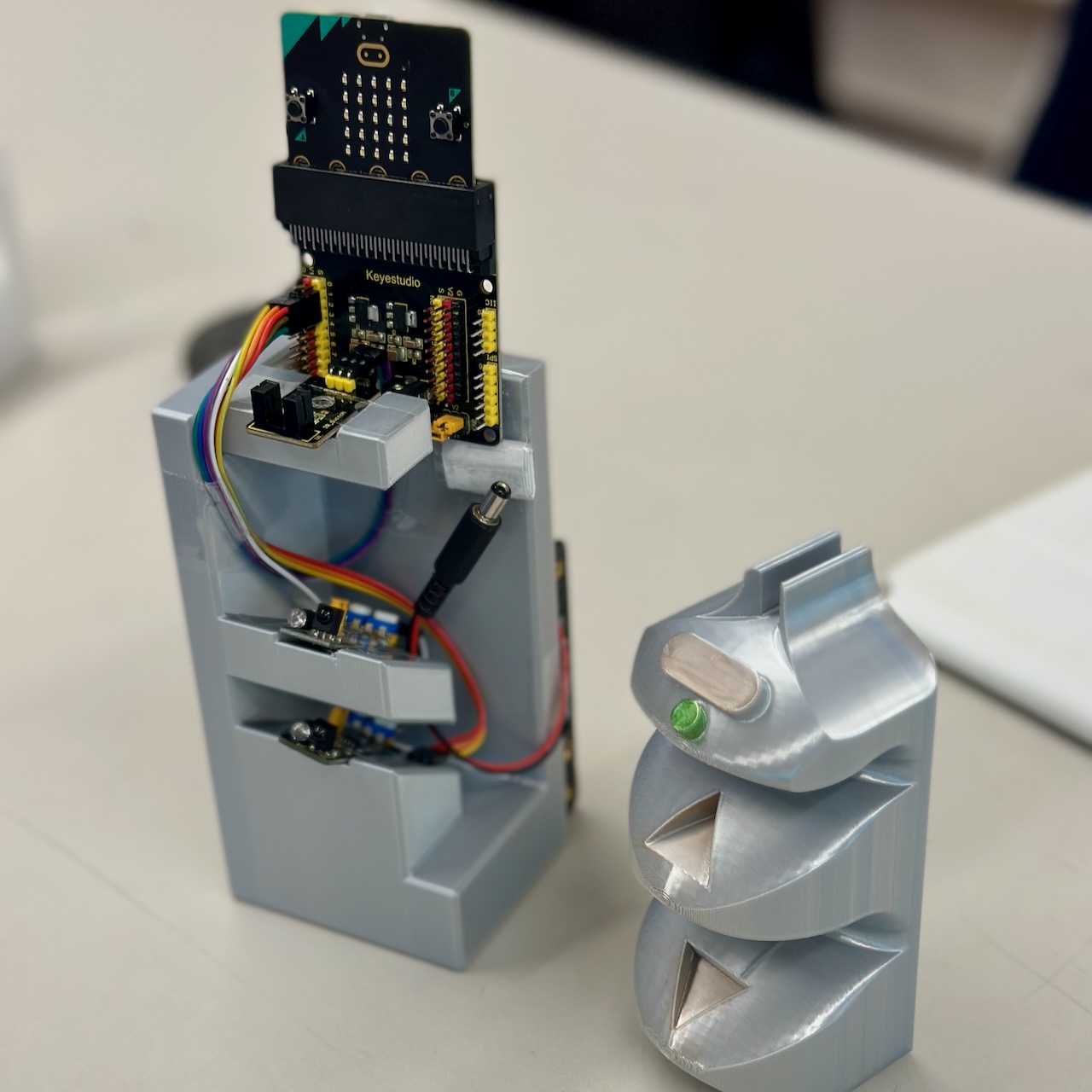
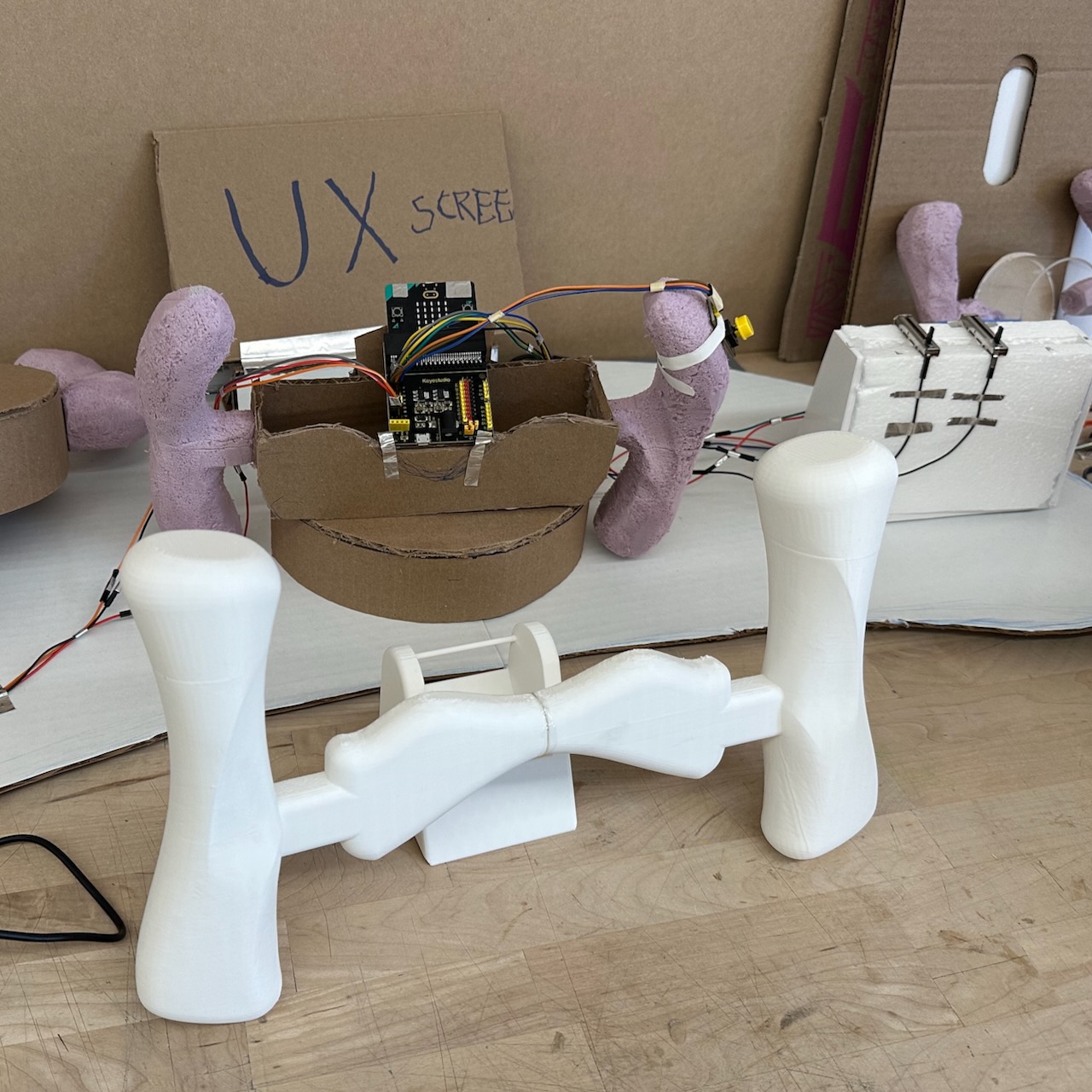
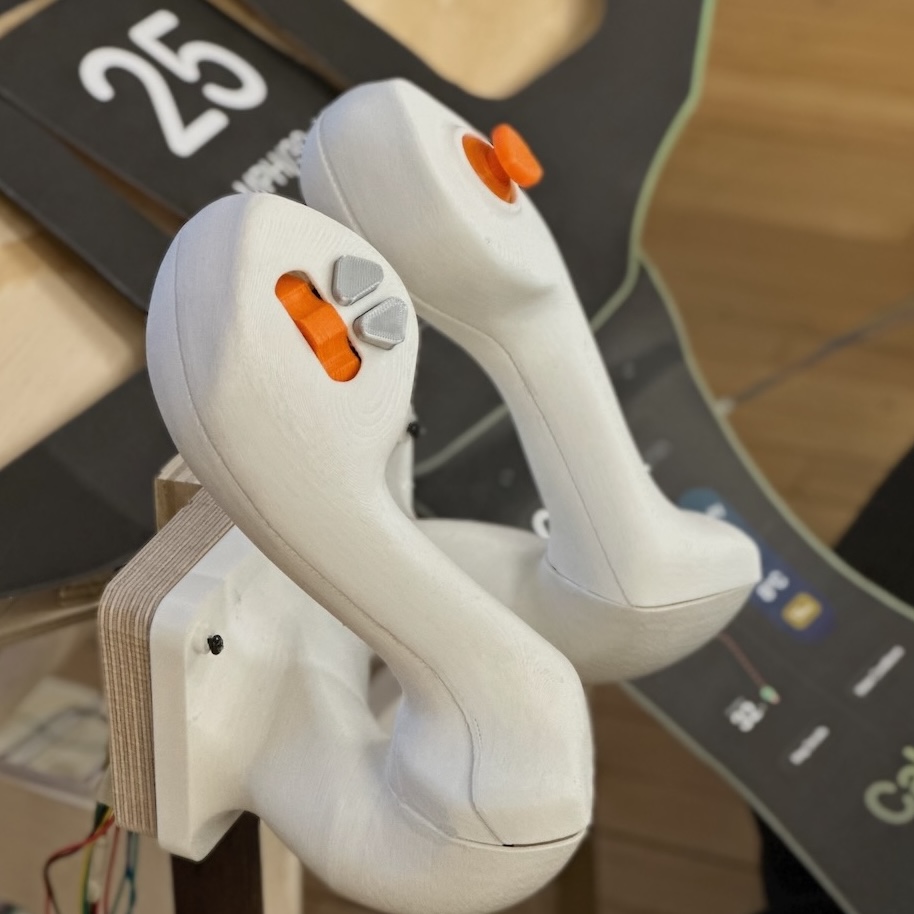
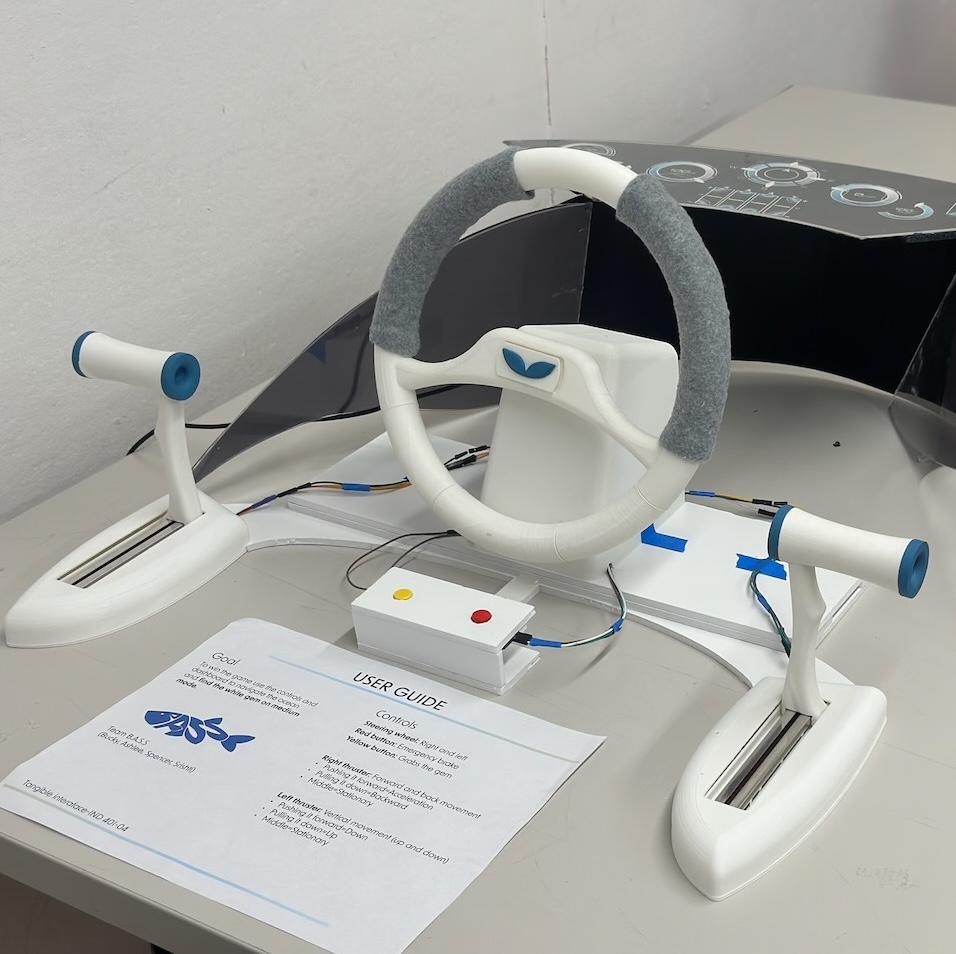
(Photos of student work, used with permission)
Haptic nostalgia —the poignant memory of the physicality: dialing a rotary phone, shifting gears in a manual transmission, opening a soda can with a pull ring — Erin McKean (@emckean.bsky.social)